

Generative AI has reshaped how B2B organizations (all of them for that matter) think about content creation, strategy, and performance. What used to require simple, manual keyword research, long production cycles, and heavy editorial oversight can now be accelerated with ultra-intelligent tools.
Yet, this transformation brings a host of new issues into the mix. Marketers have to decide how to integrate AI into workflows responsibly, maintain a specific brand voice, and use machine outputs as a foundation – not a finished product.
Below, we’ll explore how generative AI can strengthen SEO content strategies in 2025 and what B2B teams need to know to find balance.
Quick Takeaways
- Generative AI helps B2B marketers plan and scale SEO content efficiently without sacrificing quality.
- Success depends on clear human oversight—AI works best as an assistant, not an author.
- Keyword and intent analysis powered by AI creates smarter, more data-driven content decisions.
- Automation frees up creative teams to focus on messaging and authority-building.
- A structured governance framework keeps content accurate, consistent, and aligned with brand values.
Generative AI is the Future (Time to Embrace It)
SEO content has always relied on understanding audience behavior and aligning it with business goals. What generative AI changes is the speed and precision with which teams can gather insights, identify opportunities, and execute.
Instead of spending hours on manual keyword clustering or competitive audits, marketers can use AI-driven tools to:
- Surface intent patterns in search data.
- Generate topic clusters that align with buyer journeys.
- Suggest semantic variations to improve ranking breadth.
Generative AI helps teams move from reactive to proactive content creation – responding not just to existing demand but to emerging patterns in user behavior. For enterprise B2B marketers, that shift means faster go-to-market execution and a stronger ability to dominate in niche categories.
Smarter Targeting with AI
Traditional SEO starts with keywords. But in 2025, intent drives the strategy. Generative AI platforms can analyze search data, behavioral signals, and engagement metrics to reveal why users search – not just what they search for.
For example, a tool can group queries by commercial, informational, or navigational intent and generate content outlines that match each stage of the funnel. That enables B2B teams to create materials tailored to specific decision-makers, such as procurement officers, product managers, or executives.
This data-informed structure leads to:
- Reduced content redundancy.
- More focused campaigns that target qualified leads.
- Better cross-team alignment between marketing, sales, and product.
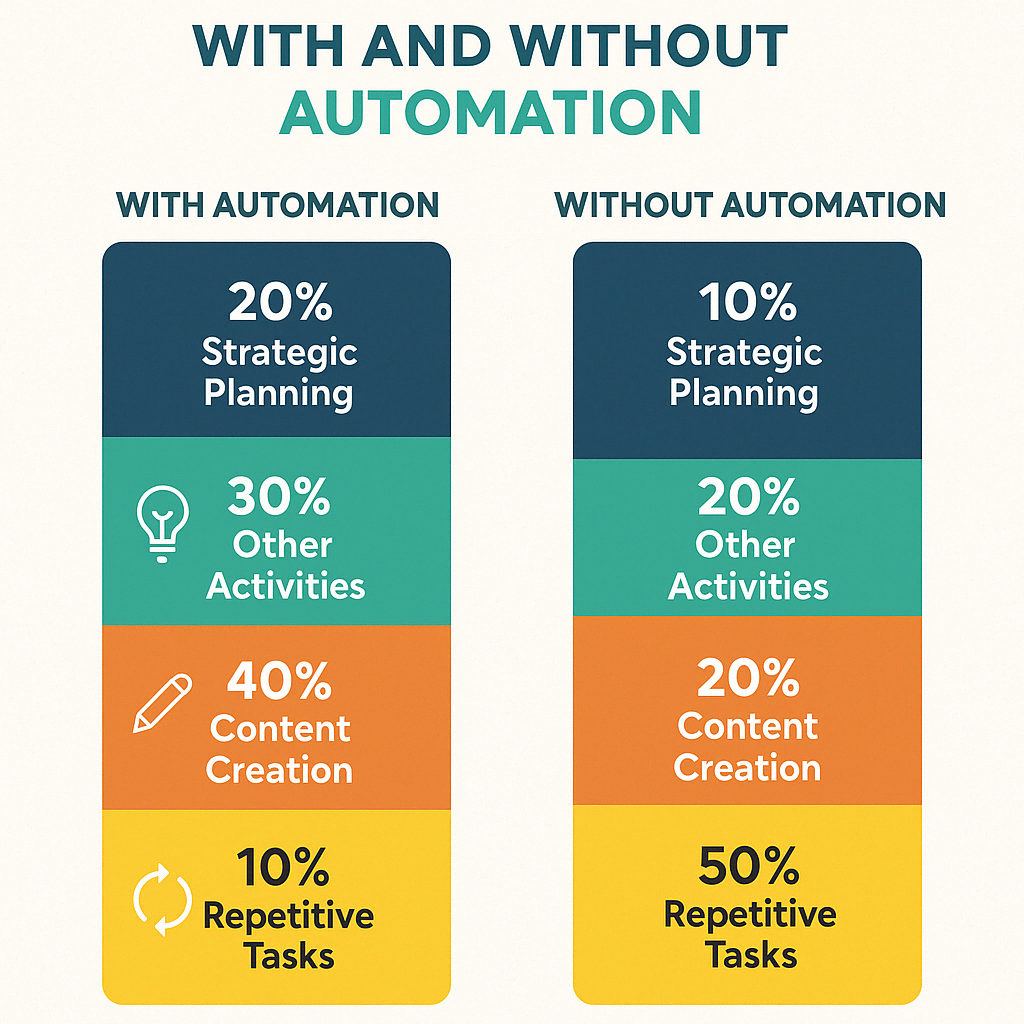
When AI handles data analysis, strategists can focus on positioning and differentiation – the creative elements that truly move markets.
Scaling Content (Without Losing Quality)
AI-generated content has often been criticized for being repetitive or robotic. That happens when it’s used as a shortcut rather than a collaborator. The strongest B2B teams use generative AI to scale output responsibly by keeping humans in the loop.
Here’s how:
- AI drafts, humans refine. Writers guide AI with structured prompts and refine drafts to match tone, industry expertise, and compliance needs.
- AI ideates, humans contextualize. Machines can brainstorm subtopics, examples, and angles, while marketers ensure relevance to audience pain points.
- AI analyzes, humans strategize. Tools identify content gaps and trends; strategists decide which to prioritize based on business goals.
This hybrid model reduces production time while improving consistency across global campaigns. Teams can focus less on word count and more on message clarity and SEO performance.
Personalization and Dynamic Optimization
Search algorithms increasingly reward personalization – content that feels tailored to the reader’s intent, location, and context. Generative AI helps marketers move closer to that ideal through dynamic optimization.
By analyzing user data, AI can recommend:
- Headline and metadata variations for different segments.
- Real-time adjustments to landing pages based on engagement signals.
- Adaptive calls-to-action that align with buyer readiness.
For example, a B2B software company can serve different case studies depending on a visitor’s industry. Instead of manually managing dozens of variations, AI tools dynamically assemble content blocks to match each persona.
When done correctly, personalization increases time on page, conversion rates, and overall SEO authority.
Governance and Accuracy: Responsible AI
Generative AI introduces scalability – but also risk. In B2B marketing, factual accuracy and brand integrity are non-negotiable.
Organizations adopting AI content tools must create AI governance frameworks that cover:
- Data sourcing and model transparency.
- Review checkpoints for compliance and editorial standards.
- Traceability of human oversight in each piece of content.
Some enterprises now assign “AI editors” who specialize in reviewing machine-assisted drafts for accuracy, bias, and tone. Others integrate internal review pipelines directly into their CMS or content workflow tools.
Establishing these processes early prevents misinformation and reinforces trust in your brand’s content strategy.
SEO Analytics Meets Predictive Intelligence
AI doesn’t stop at creation – it transforms how teams measure impact. Predictive analytics can now anticipate ranking opportunities and guide optimization long before a campaign launches.
For example:
- Generative models forecast how keyword clusters will perform based on historical data.
- Predictive SEO tools identify emerging topics before competitors do.
- AI-powered dashboards connect organic visibility with revenue attribution.
This evolution means B2B marketers can move from reactive reporting to forecast-driven SEO planning. Instead of waiting for quarterly analytics, they can iterate weekly, supported by continuous learning from AI feedback loops.
Integrating Generative AI Into the B2B Workflow
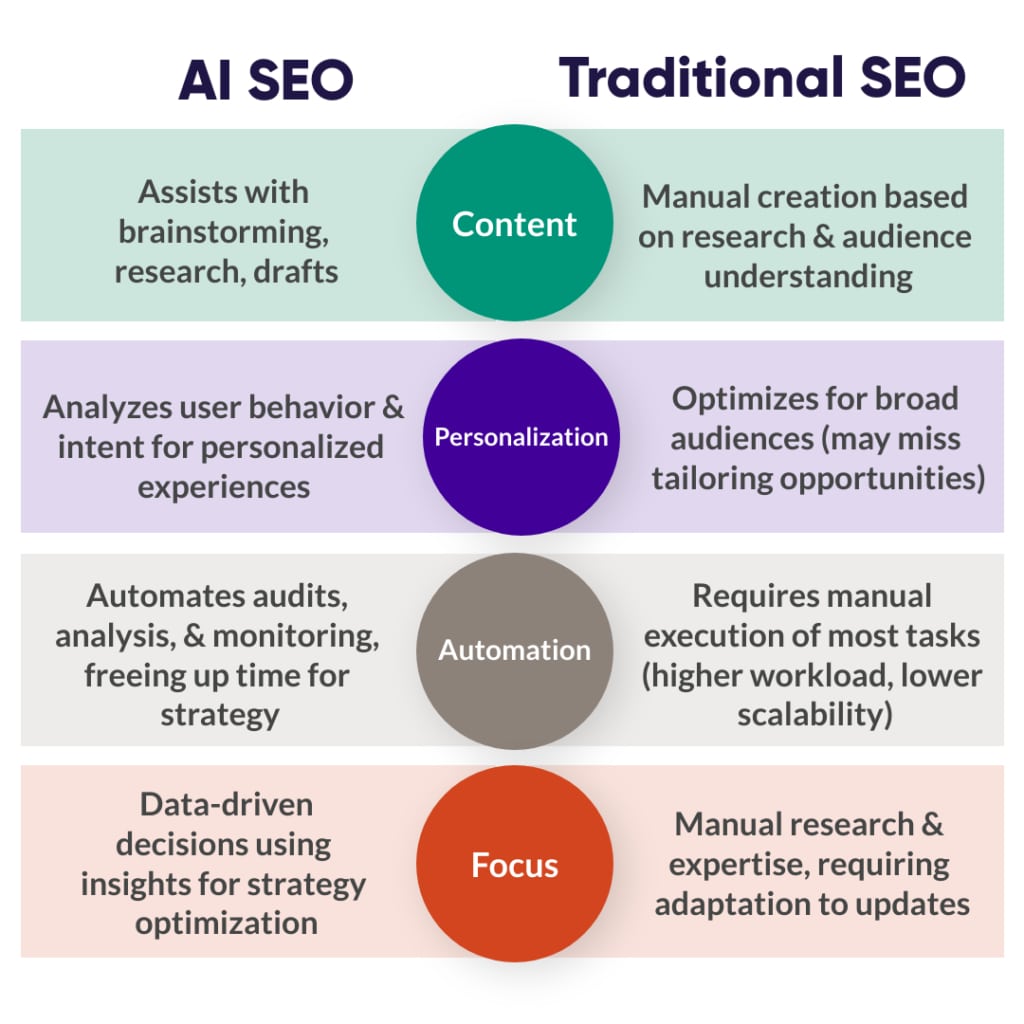
The most successful AI adoption doesn’t replace people – it reshapes collaboration. Marketing, product, and sales teams can all use shared AI insights to maintain consistent messaging and strategy alignment.
Consider these workflow adjustments:
- Centralized prompt libraries. Store effective prompts for different content types—case studies, whitepapers, landing pages – to maintain tone and quality.
- Cross-functional dashboards. Give visibility into AI performance metrics across departments, reducing silos between SEO and brand.
- Continuous feedback loops. Use engagement and ranking data to refine AI training inputs over time.
These practices help transform AI from a one-time experiment into a sustainable, scalable capability.
Measuring ROI on Generative AI for SEO
Measuring success requires both quantitative and qualitative metrics. The impact of generative AI should be visible in:
- Reduced content production time.
- Increased output quality and ranking velocity.
- Higher organic conversion rates.
- Improved consistency across global campaigns.
Teams should track not only cost savings but also the opportunity cost avoided – faster go-to-market cycles and enhanced ability to pivot when algorithms or audience behaviors shift.
ROI isn’t just financial; it’s operational efficiency combined with strategic agility.
What Does the Future of AI-Driven SEO Look Like?
Generative AI will soon evolve beyond producing words – it’ll help shape strategy. Imagine SEO tools that integrate directly with CRM data, identifying audience needs from sales conversations or customer service interactions.
Over time, generative systems will:
- Create adaptive campaigns that evolve automatically based on user sentiment.
- Connect content creation with product development through shared analytics.
- Reduce manual research by synthesizing trends across multiple industries.
B2B marketers who learn to balance automation with human creativity will lead the next era of digital communication.
How Should You Approach AI in Your SEO Strategy?
AI is your friend if used responsibly. Start small, with pilot projects focused on specific workflows like keyword clustering or draft generation. Then build internal playbooks for review, governance, and optimization.
As AI matures, organizations that integrate it early will adapt faster and publish smarter. Generative AI doesn’t replace marketing expertise – it amplifies it.
Your Business Can Use AI Responsibly and Effectively
AI content creation will keep evolving, but human strategy remains at the center. The goal isn’t faster writing – it’s smarter storytelling backed by data. B2B leaders who treat AI as a structured capability, not a shortcut, will create stronger, more consistent SEO ecosystems that serve both users and search engines.
ISBM can help you stay ahead of the curve by connecting you with practical, research-driven insights into how B2B marketing is evolving. Through expert resources and peer collaboration, we provide the knowledge base and support needed to make informed decisions—especially in fast-changing areas like business market segments. We provide open courses and customized education programs for your marketing teams. Become a member today!