
Immigration has long been a cornerstone of economic growth and innovation, not just in the United States but across the globe. At the ISBM Member Meeting in June, Dr. Fariborz Ghadar, a leading expert in global management, shared his extensive research on the economic impact of immigration and strategies for navigating the global economy.
This article will explore Dr. Ghadar’s findings on how immigration drives economic growth and innovation, offering insights into how policymakers and businesses can leverage immigration for economic prosperity. We will also delve into his research on global economic trends and the strategies businesses need to thrive in an interconnected world.
Quick Takeaways
- Immigration contributes significantly to innovation, entrepreneurship, and workforce development in various sectors.
- While globalization has driven substantial global GDP growth, it has also created economic inequalities in certain communities.
- Companies should remain agile and responsive to rapidly changing global economic conditions to thrive in an interconnected world.
- Effective immigration policies and practices can help countries and businesses maximize the economic benefits of a diverse workforce.
The Economic Benefits of Immigration
Dr. Ghadar’s research underscores the vital role immigration plays in driving economic growth. His latest findings highlight how immigration fosters innovation, entrepreneurship, and workforce development across a variety of sectors.
For example, immigrants account for 23% of STEM workers and 22% of entrepreneurs in the United States, filling critical roles that help propel economic advancement and technological progress.
Immigration as a Driver of Innovation and Growth
Immigrants bring diverse perspectives and skills, fueling creativity and problem-solving—key components of economic growth. This diversity often leads to the creation of new products, services, and technologies that may not emerge in more homogeneous environments. Many leading technology companies, such as Google and Tesla, were founded or co-founded by immigrants, illustrating how immigration spurs innovation and economic expansion.
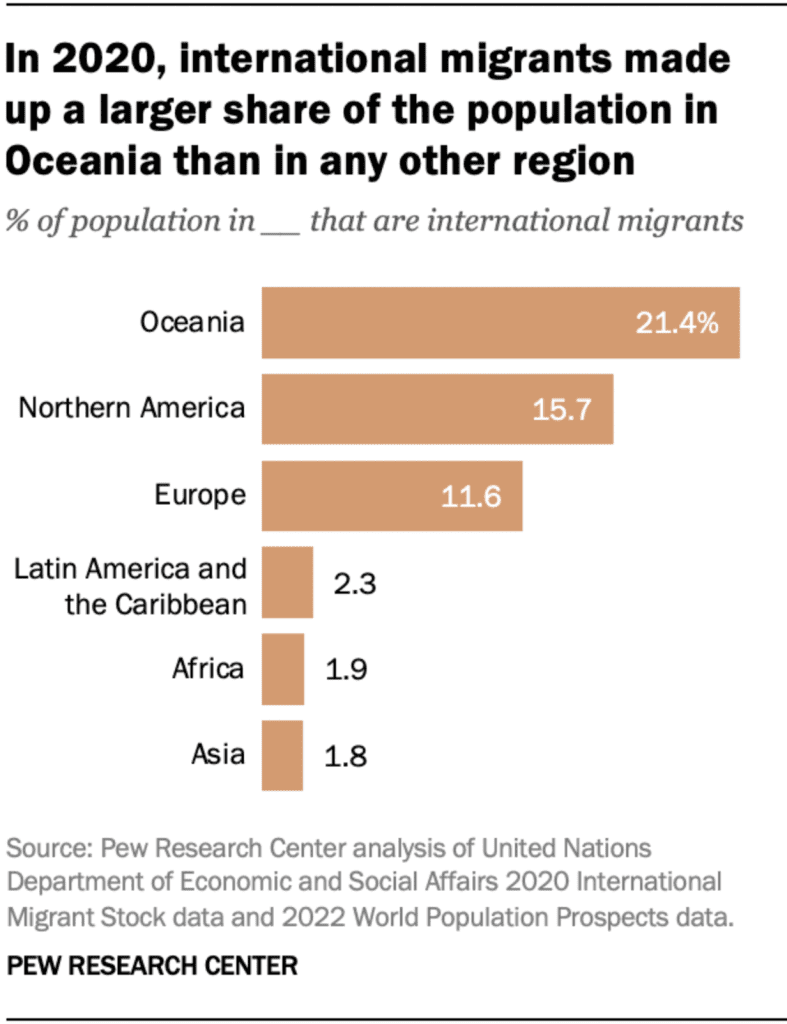
In addition to fostering innovation, immigration addresses critical labor shortages, especially in countries with aging populations where the native workforce may not meet labor market demands. For instance, regions like Oceania have 21.4% of their population made up of migrants, while North America follows with 15.7%.
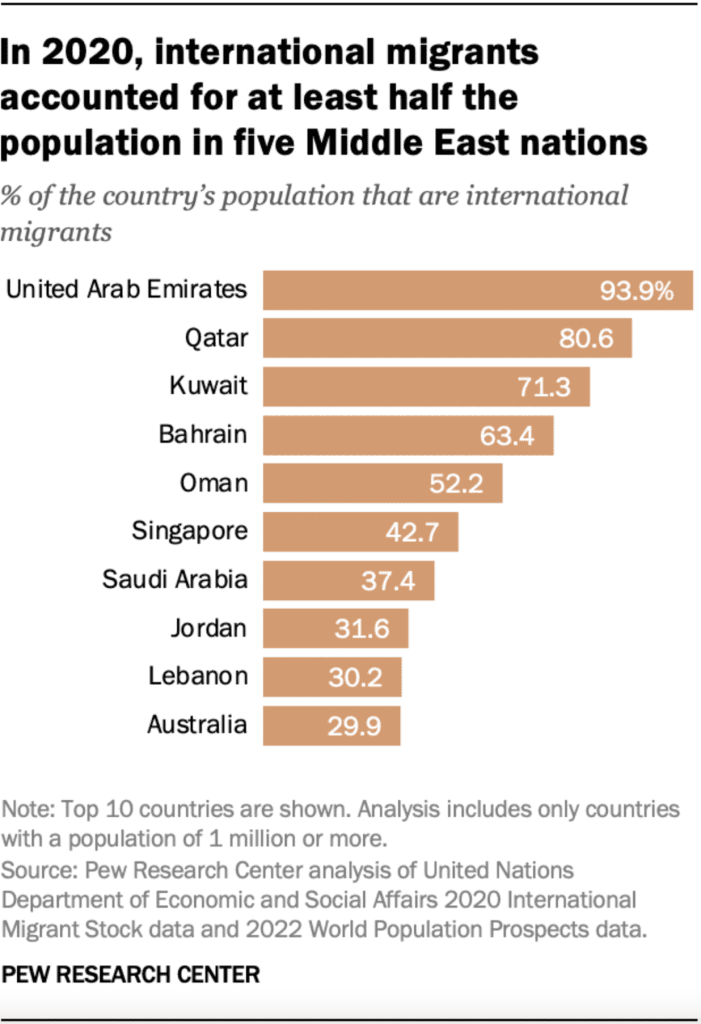
In some Gulf countries, such as the United Arab Emirates and Qatar, migrants make up an even larger share—93.9% and 80.6% of their populations, respectively.
Immigration is also crucial for maintaining demographic stability in aging economies. Migrants help balance the ratio of working-age individuals to dependents, ensuring a sustainable workforce and contributing to long-term economic health. Without immigration, many developed economies could face substantial challenges, including labor shortages and reduced economic growth.
Leveraging Immigration for Economic Prosperity
Strategies for Policymakers
Policymakers can maximize the economic benefits of immigration through inclusive policies and practices. For instance, prioritizing skilled immigrants can help meet labor market needs in critical sectors like:
- Healthcare
- Engineering
- Technology
Encouraging immigrant entrepreneurship is another effective strategy, as immigrant entrepreneurs are often more likely than native-born counterparts to start new businesses, creating jobs and stimulating local economies.
Supporting Immigrant Integration in Business
Businesses also have a crucial role in leveraging immigration for growth. Creating inclusive work environments that value the unique skills and experiences of immigrant employees can lead to higher productivity, innovation, and profitability. Companies should invest in programs that promote cross-cultural understanding and collaboration to build a more cohesive workforce.
Furthermore, supporting immigrant entrepreneurs by offering mentorship, access to networks, and funding opportunities can drive innovation and business expansion. Companies that effectively integrate immigrants into their teams often outperform those that do not, benefiting from a broader range of perspectives and ideas.
Understanding Global Economic Trends
Globalization and Economic Dynamics
Dr. Ghadar’s research goes beyond immigration, examining global economic trends and their implications for businesses. He identifies four key parameters affected by globalization:
- Economy
- Geopolitics
- National identity
- Technology
Globalization has been a major driver of economic growth over the past few decades. According to the World Economic Forum, since the early 1980s, the volume of global GDP has increased nearly fourfold, reflecting significant economic expansion fueled by globalization, technological advancements, and increased trade among nations.
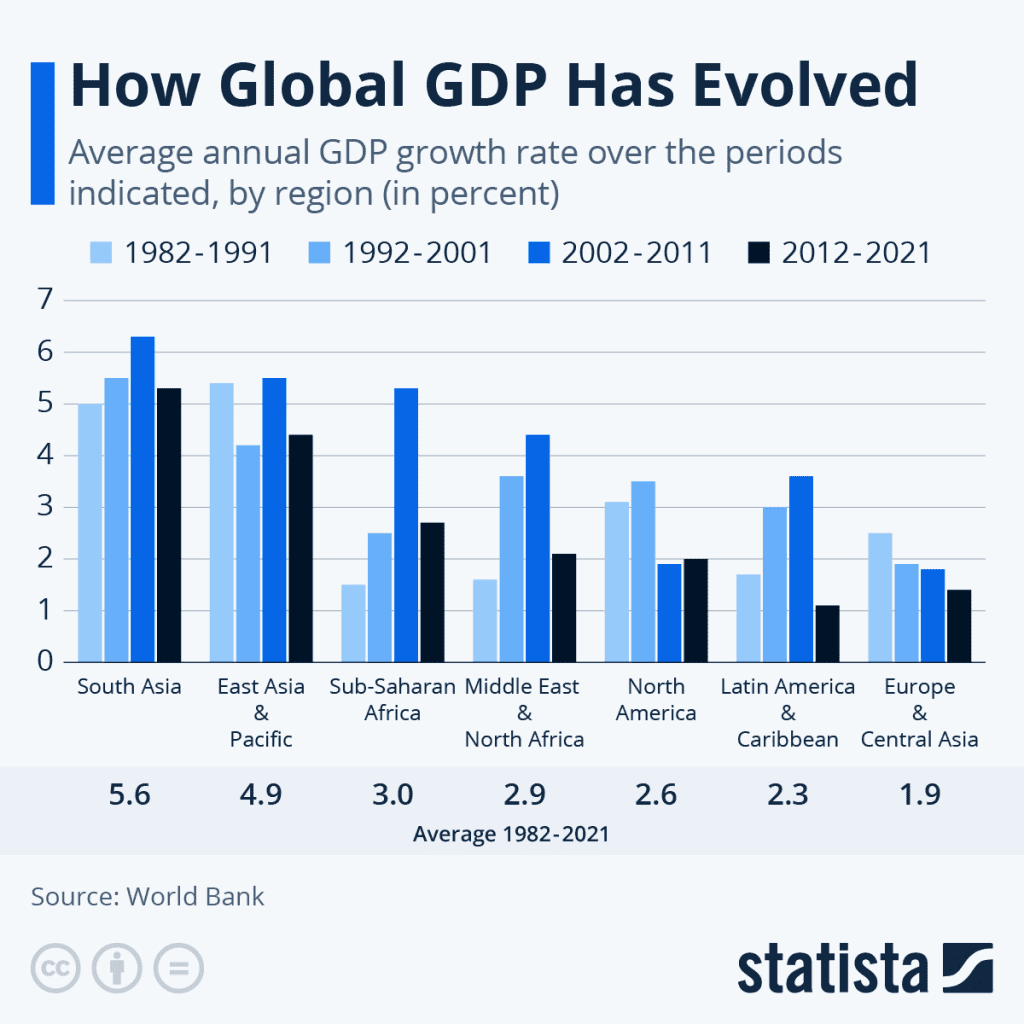
However, this growth has not been evenly distributed. While many regions have prospered, certain communities, like U.S. coal miners, have experienced economic decline due to shifts in trade patterns and technological changes. These disparities highlight the complex effects of globalization, which can create both opportunities and challenges for different sectors and populations.
Challenges and Opportunities in a Globalized World
Globalization has led to geopolitical uncertainties, regional conflicts, and rising nationalism, which can disrupt supply chains and increase market volatility. However, it also presents opportunities for businesses to expand into new markets and access diverse talent pools. To seize these opportunities, companies must adapt their strategies.
Strategies for Thriving in an Interconnected World
Diversifying Markets and Embracing Innovation
Dr. Ghadar recommends that businesses diversify their markets and supply chains to reduce dependency on any single region or country, mitigating risks associated with geopolitical uncertainties and tapping into growth opportunities in emerging markets.
Investing in technology and innovation is another key strategy for maintaining competitiveness. Companies should leverage advanced technologies like artificial intelligence and data analytics to optimize operations and enhance decision-making.
Building Resilience Through Sustainable Practices
Adopting sustainable growth strategies is vital for building resilience in a volatile global economy. This involves reducing carbon footprints, investing in renewable energy, and developing products and services aligned with sustainability goals. Such practices help companies protect their reputation, appeal to socially conscious consumers, and prepare for future regulatory changes.
Harness Immigration and Global Trends for Growth with ISBM
Immigration plays a crucial role in driving economic growth and innovation, providing a vital source of talent, creativity, and entrepreneurship. Dr. Fariborz Ghadar’s research highlights the importance of inclusive immigration policies and practices that can help countries and businesses harness these benefits for economic prosperity. At the same time, his insights on global economic trends underscore the need for businesses to stay agile and adaptable.
To dive deeper into these insights, the full presentation is available at ISBM.com/library. Explore more of Dr. Ghadar’s research to better understand how immigration and global economic trends can shape your business strategy.
ISBM is a nonprofit, global network of business researchers and practitioners. Ask about how an ISBM Membership can help you now or visit ISBM today to learn more!