

Industrial B2B businesses face unique demands when it comes to SEO and content optimization. In 2025, both search engines and buyers expect content that’s deep in technical detail, easy to navigate, and tuned to user intent.
Generic keyword stuffing and product specs just don’t work anymore. Industrial buyers need clarity, context, and trust in content. AI tools are finally making this achievable at scale, but only if combined with careful strategy.
Quick Takeaways:
- Search intent guides AI-powered optimization in 2025.
- Strategic topic clusters make you more discoverable and trustworthy.
- Original, technical content earns attention and improves links.
- UX-related tech and structure now heavily influence rankings.
- Content planning requires constant data-informed iteration.
Search Intent Now Guides AI-Powered Optimization
SEO used to mean chasing keywords—plant maintenance checklist, industrial pump specs, lubricants for aerospace, and so on.
In 2025, search engines are much more sophisticated (for better or worse). They work to match content to user intent, whether a buyer is researching, comparing, or ready to purchase. That means that top-ranking pages should match what the user expects to find.
AI tools are useful, but they only work when guided by correct intent. You can generate a tech article, but it won’t rank if it doesn’t answer the questions engineering teams actually ask. To stay relevant:
- Create content that aligns with buyer search paths. For example, “How to evaluate pump efficiency” or “Regulations around industrial valve materials.”
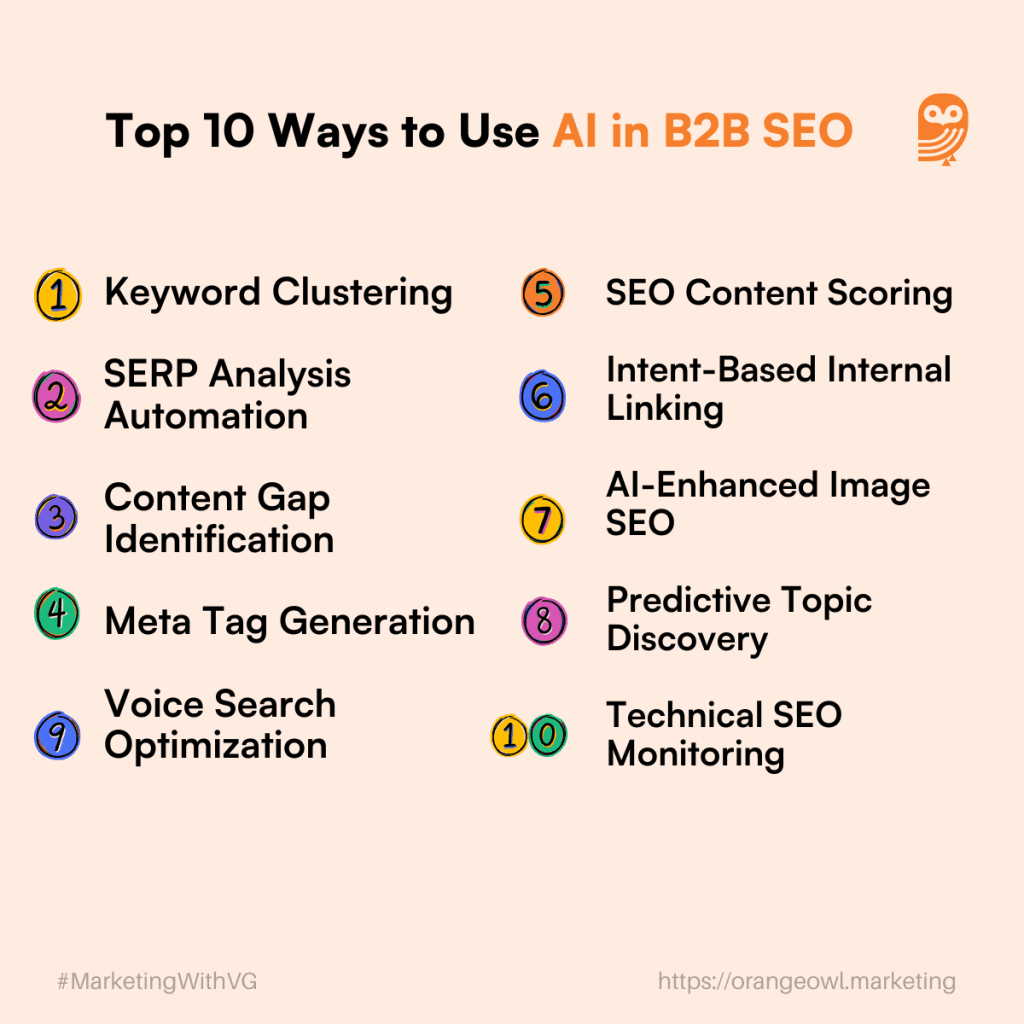
- Analyze SERP (Search Engine Results Page) results using AI-based tools to extract common questions and FAQs displayed in search results.
- Create content that answers both explicit and implicit questions—e.g. compliance standards, ROI considerations, or maintenance frequency.
Getting intent right results in higher rankings, longer site dwell time, and stronger engagement. And yes, search engines are now using engagement signals to assess whether content truly solves a real-world problem.
Strategic Topic Clusters Deliver Discoverability and Trust
Search engines reward content organized into tightly linked topic clusters. For industrial B2B, a cluster often starts with a long-form pillar page. Say, “Industrial Pump Systems overview”—with internal links to specialized pages: “Pump selection guidelines,” “Pump maintenance best practices,” or “Pump energy efficiency standards.”
This matters for several reasons:
- Clarity for search engines: Topic clusters signal a cohesive information structure that’s easier for crawlers to follow and index.
- Improved user experience: Visitors can navigate deeply through information instead of bouncing after finding superficial content.
- Relevance across queries: A cluster ensures each user type—engineer, procurement lead, maintenance planner—finds tailored content that still ties back to your brand.
- Stronger internal linking: Helps preserve SEO value and improve authority for your main topic.
- Easier to scale: You simply add subtopics or updates rather than start from scratch, boosting ongoing performance.
If your site still uses scattered posts or category pages with minimal structure, it’s time to upgrade to topic clusters with internal links, clear navigation, and regular updates.
Original, Technical Content Earns Attention and Links
In standard SEO content, product descriptions and basic blog posts may have worked previously. In 2025, quality matters more than ever. Search engines detect content that adds value, not just repetition. Buyers in industrial sectors need engineering-grade depth—diagrams, formulas, case comparisons, and product variation details.
You’ll outperform competitors by:
- Publishing detailed how-tos, lifecycle charts, performance comparisons, and compliance guidelines.
- Adding data tables, downloadable PDFs, or step-by-step instructions that go beyond surface level.
- Sourcing insights from your engineering team—or from technical partnerships—to add specificity and credibility.
- Ensuring all content is authored or reviewed by someone with demonstrable knowledge in your domain.
Meaningful content attracts external links from engineering forums, regulatory bodies, and industrial resources. Over time, topic authority builds, boosting your site’s SEO ranking and credibility in search results.
UX-Related Tech and Structure Influence Rankings
Technical content alone isn’t enough.
In 2025, search engines also evaluate user experience signals: page load time, mobile performance, readability, and interactivity. When industrial buyers hit slow-loading diagrams, unreadable tables, or unintuitive navigation, they go elsewhere. Their bounce behaviors are now used for ranking assessment.
Here’s what you should know:
- Mobile optimization: Many site visits come from technicians or buyers using phones or tablets on-site. Pages must be responsive, legible, and load quickly in low-bandwidth environments.
- Page speed: Auto-optimized images, efficient scripts, and server-side rendering cut load time.
- Table and diagram handling: Interactive images that zoom and load progressively improve usability.
- Logical structure: Descriptive headings, bullet lists, and clear labeling help users scan quickly.
- Schema markup: Schema for FAQs, technical specs, products, and case materials helps search engines surface your content as rich results.
When UX aligns with content value, your pages satisfy users and search engines alike, improving both rankings and trust.
Content Planning Requires Constant Data-Informed Iteration
In past years, annual planning cycles were enough to guide blogs. Now, industrial B2B content calendars must be agile and data-driven. Growth comes from regular checks and updates across topics, formats, and search queries.
To stay ahead:
- Use analytics and AI tools to track performance, query trends, and SERP movement monthly.
- Update or refine content with fresh data, trends, regulatory changes, or new analysis.
- Repurpose posts into videos, downloadable tools, or technical diagrams to capture multiple engagement formats.
- Audit content monthly to close gaps, add sections, update links, and redirect outdated pages.
- Review competitor strategies to spot missing or underdeveloped content within your pillar topics.
That level of activity builds ongoing momentum rather than sporadic spikes. The goal is not just fresh content—it’s content that evolves with buyer needs and search engine expectations.
Plugging AI Tools into Research and Optimization
Industrial B2B teams often lack bandwidth to keep up with changes. AI solves that, but only if used carefully. AI tools can assist with:
- Scan search results and extract trending subtopics
- Automatically flag outdated content or thin pages
- Propose new sections or titles for pillar updates based on keyword shifts
- Generate structured headers or FAQ defaults for schema inclusion
Always apply human review, particularly with technical content. AI should suggest, not publish. Your engineers, product managers, and marketing team must refine or rerank content to maintain accuracy and domain relevance.
Human-Led Review Drives Trust and Compliance
That leads to an important point: industrial B2B audiences require factual accuracy and adherence to industry standards. Any content that wrongly states pressure ratings, specifications, or application procedures risks losing credibility—and may expose companies to compliance issues. That’s the last problem you want.
Successful teams in 2025 rely on a workflow that includes:
- SME review of every technical content piece
- Regular audits for accuracy and relevance
- Documentation control—for example, changing PDFs when new regulations emerge
- Clear author attribution and publication dates for trust and accountability
- Archival of outdated content with redirect guidance rather than silent deletion
AI helps with scale, but human review ensures safety, correctness, and reputation protection.
Measuring Success: What to Track
Optimization must pay off in measurable KPIs. For industrial B2B, relevant metrics include:
- Organic traffic for pillar pages vs. standalone posts
- Engagement metrics (time on page, clicks on spec tables, diagram pan/zoom)
- Conversion or form completion for technical resources (datasheets, technical inquiries)
- Ranking changes for primary and supporting keywords
- Backlink acquisition from industry authority domains
- Bounce rate and page depth on mobile and desktop
Tracking these indicators helps you attribute value to content and UX efforts. If people leave after a few seconds, you know automatically that something is off—even if the content is detailed.
How Teams Can Adopt These Trends
Making progress starts with structure and investment:
- Audit your current content: identify missing pillars, outdated specs, or structure gaps
- Set up AI-enabled content monitoring: flag posts that need updates or rewrite
- Build a topic cluster roadmap: plan to fill out subtopic pages over time
- Deploy UX optimizations: make pages fast, mobile-ready, and easy to read
- Enforce SME review: ensure accuracy with internal technical stakeholders
- Track performance monthly: compare progress with your benchmarks and competitors
Content strategy becomes continuous improvement—never a one-off task. That’s how industrial B2B teams stay relevant and competitive in search results.
Industrial B2B Needs SEO!
In 2025, AI and SEO content optimization isn’t a luxury for industrial B2B, it’s a necessity. Buyers expect thoughtful, accurate, and accessible content that supports complex decisions. Search engines reward high-value, well-structured pages that match user intent and engagement.
By focusing on search intent, topic clusters, technical depth, UX, and ongoing iteration, your content can lift visibility and build trust. AI tools help you move faster, but human oversight ensures reliability. If you commit to this structured approach, you’ll improve rankings, traffic quality, and engagement across complex industrial buying cycles.
ISBM can help you stay ahead of the curve by connecting you with practical, research-driven insights into how B2B marketing is evolving. Through professional resources and peer collaboration, we provide the knowledge base and support needed to make the right decisions—especially in constantly-changing areas like performance marketing. We provide open courses and customized education programs for your marketing teams. Become a member now!