

Artificial intelligence is transforming how marketers gather insights, engage audiences, and deliver results. But AI’s full potential can’t be realized without a strong foundation in AI literacy skills. As marketing becomes more data-driven, understanding how AI tools work—and how to use them strategically—is no longer optional. It’s a competitive advantage.
Professionals with AI literacy aren’t expected to build models from scratch. Instead, they know how to ask the right questions, assess outputs critically, and integrate AI into broader marketing strategies. These aren’t just tech skills—they’re business skills for the future.
Before diving into the top 10 skills, here are five fast takeaways:
5 Quick Takeaways:
- AI is not just automation. It includes prediction, personalization, content generation, and analysis—skills marketers can harness in multiple ways.
- Understanding AI ethics and data privacy is essential for building trust with customers and avoiding legal pitfalls.
- Prompt engineering is becoming a core communication skill for marketers using generative AI tools.
- Human oversight still matters. AI can suggest, but marketers must decide.
- Upskilling in AI literacy helps marketers work smarter—not harder—while staying ahead in a fast-moving field.
The 10 Essential Skills for AI Literacy in Marketing
1. Strategic AI Thinking
Marketers don’t need to code, but they do need to think strategically about how AI fits into campaigns. This includes identifying where AI adds value (e.g., segmenting audiences or forecasting trends) and where human creativity still leads. Strategic thinking ensures that AI tools are aligned with business goals—not just used for novelty.
2. Data Interpretation and Critical Thinking
AI is only as good as the data it learns from. Marketers must know how to interpret data outputs, ask how conclusions were drawn, and determine if insights are trustworthy. That means spotting anomalies, understanding biases, and knowing when to question the results.
3. Prompt Engineering
With the rise of tools like ChatGPT and image generators, prompt engineering is a critical skill. Knowing how to write effective, specific prompts helps marketers get higher-quality outputs—faster. It’s not just what you ask, but how you ask it that influences results.
4. Understanding Machine Learning Basics
You don’t need a computer science degree, but a foundational understanding of how machine learning works helps marketers choose the right tools and set realistic expectations. Knowing terms like “training data,” “model bias,” and “supervised learning” helps bridge the gap between marketing and tech.
5. Content Optimization with AI
AI writing assistants and SEO tools can help marketers create, repurpose, and personalize content at scale. AI-literate marketers know how to use these tools to generate ideas, rewrite for tone, improve readability, or test variations—while ensuring final content meets brand standards.
6. Ethical Use of AI and Privacy Awareness
Marketing teams must understand the ethical risks of AI—especially when handling personal data. AI literacy includes being aware of data consent, biases in algorithms, and transparency in customer communications. Trust can be eroded quickly if AI is used irresponsibly.
7. Tool Selection and Evaluation
Thousands of AI tools promise to automate, optimize, or analyze something. AI-literate marketers can evaluate tools for ROI, integration capabilities, data handling, and ease of use. They ask the right questions before adopting a new platform—and know when a human-led solution is better.
8. Collaboration with Data Teams
AI in marketing works best when there’s strong collaboration between creative and technical teams. Marketers with AI literacy can better brief data analysts, interpret results, and turn models into actionable plans. This cross-functional fluency speeds up execution and minimizes friction.
9. Scenario Planning and A/B Testing with AI
AI enables faster testing of creative concepts, messaging, and offers. Marketers must know how to set up experiments, monitor performance, and act on results. AI literacy means knowing the difference between correlation and causation—and ensuring results aren’t driven by flawed logic or incomplete data.
10. Lifelong Learning and Adaptability
AI tools evolve rapidly. Skills that matter today might shift in six months. AI-literate marketers embrace ongoing learning—attending workshops, reading updates, experimenting with new tools, and staying curious. Adaptability is not just a nice-to-have—it’s essential.
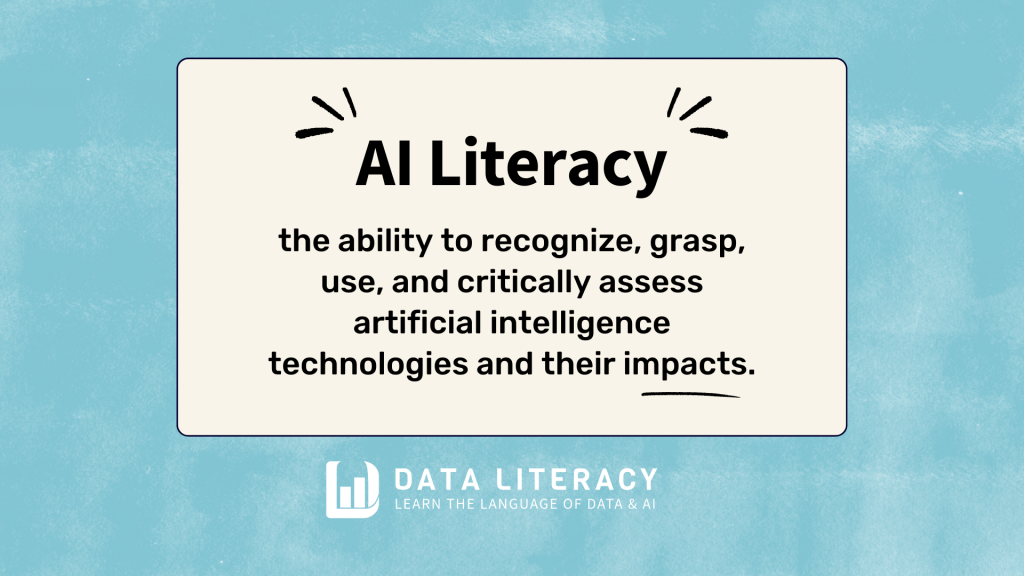
Why AI Literacy Skills Matter Now
AI isn’t just another tool—it’s becoming embedded in the way marketing is done. Whether automating routine tasks or unlocking entirely new capabilities, AI empowers marketers to move faster, personalize at scale, and make more data-informed decisions.
But without literacy, marketers risk misusing these tools—or becoming dependent on outputs they can’t evaluate. Worse, poor implementation can lead to broken customer trust, legal exposure, or off-brand content.
Teams that invest in AI literacy skills now will be better equipped to lead campaigns, manage vendors, and demonstrate ROI. They’ll know when to let AI assist—and when to step in and steer the direction.
Building an AI-Ready Marketing Team
Here’s how organizations can begin:
- Offer internal training in AI fundamentals for marketing staff.
- Foster cross-departmental collaboration between marketing, IT, and data science.
- Encourage experimentation with low-risk pilot projects using AI tools.
- Support a culture of curiosity where questions about how tools work are encouraged.
- Provide ethical guidance so teams understand the impact of their decisions.
Building AI literacy is a team effort, but one that pays off quickly. As AI becomes more integrated into CRMs, analytics platforms, content tools, and customer journeys, marketers who speak the language of AI will be in high demand.
Brush Up Your Skills = Stay Ahead
Marketing continues to shift from intuition-driven to insight-driven. AI isn’t replacing marketers—it’s equipping them with superpowers. But to use those powers effectively, marketers must first build the skills to wield them wisely.
From strategic thinking and data literacy to ethical awareness and prompt engineering, these AI literacy skills form the foundation of the next generation of marketing professionals. Ready to upskill? The future’s already here.
ISBM is a nonprofit, global network of business researchers and practitioners. Ask about how an ISBM Membership can help you now or visit ISBM today to learn more!