

The secret to understanding your customers is to know your buyer’s journey, inside and out across the full B2B marketing journey.
The buyer’s journey is a fundamental concept in B2B marketing and sales that describes the three-stage process a customer goes through before they decide to make a purchase. This is where B2B buyer journey mapping helps teams clearly align marketing and sales actions across each stage.
Understanding this process allows businesses to align their marketing and sales strategies with their customers’ needs at each stage of the journey through the B2B marketing curriculum. This alignment can lead to more effective marketing campaigns, improved sales conversions, and ultimately, increased revenue.
This process also helps businesses to build stronger relationships with their customers. By providing the right information and support at each stage of the journey, businesses can position themselves as trusted advisors, enhancing customer loyalty and satisfaction.
In this blog post, we discuss each stage of the buyer’s journey, the process a customer goes through when purchasing a product or service, and strategies for optimizing this journey for better conversion rates.
Quick Takeaways
- Each stage of the buyer’s journey represents a different phase in the buyer’s process of recognizing a problem or opportunity, evaluating potential solutions, and choosing a specific solution.
- The process of purchasing a product begins with the creation of a business case and is followed by the delivery, implementation, and integration of the product or service.
- Align marketing and sales efforts with the buyer’s needs at each stage of the journey to enhance the buyer’s experience, increase conversion rates, and build long-lasting relationships.
- Both persuasion and influence are crucial for making strategic choices that can impact your organization’s performance and profitability.
3 Stages of the B2B Buyer’s Journey
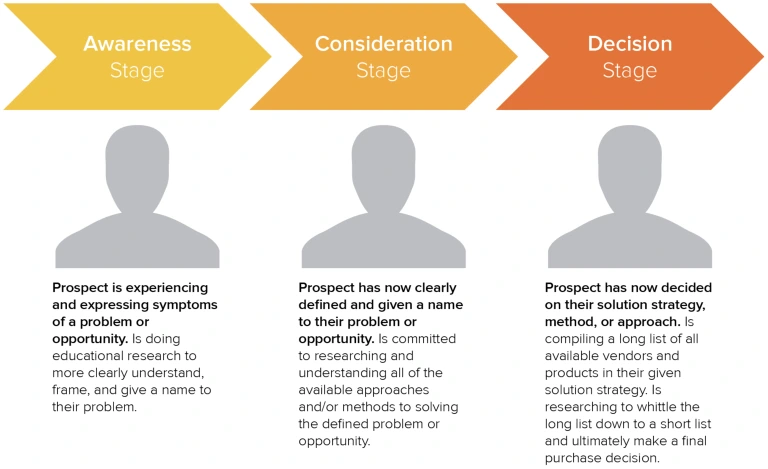
In the complex world of B2B transactions, understanding the buyer’s journey is crucial. It’s a process that unfolds in three distinct stages: Awareness, Consideration, and Decision, which closely align with common marketing funnel stages. First, you need to explore each of these stages to gain a better understanding of the buyer’s journey. These stages reflect core B2B marketing fundamentals used to guide strategy and content.
1. Awareness
The Awareness stage is the starting point of the buyer’s journey. It’s when potential buyers realize they have a problem or an opportunity for improvement within their organization. This realization might stem from:
- Internal audits
- Market trends
- A competitor’s advantage
At this stage, buyers are not looking for solutions just yet. Instead, they’re trying to understand their problem or opportunity better. They’re asking questions, conducting preliminary research, and defining the parameters of their situation.
During this stage, it’s crucial to provide educational content that helps these potential buyers understand their challenges better.
2. Consideration
Once buyers have a clear understanding of their problem or opportunity, they move into the Consideration stage. Here, they’re actively looking for solutions. They’re evaluating different methods, technologies, services, or products that can help them overcome their challenges or capitalize on their opportunities.
During the Consideration stage, buyers are comparing different solutions, weighing their pros and cons. They’re looking at:
- Case studies
- Product specifications
- Reviews
- Cost
- Implementation time
- Potential ROI
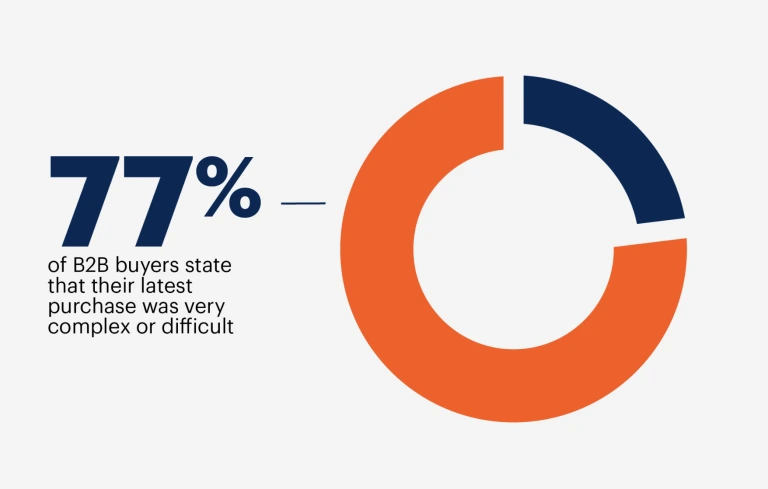
As a B2B provider, it’s your role to demonstrate how your solution fits their needs and stands out from other options in the market. It’s also important to make this process as seamless as possible for buyers, since 77% of B2B buyers stated that their latest purchase was very complex or difficult.
3. Decision
The Decision stage is the final step in the buyer’s journey. At this point, buyers have narrowed down their options and are ready to make a choice. They’re looking at vendor reliability, after-sales service, and the overall value proposition.
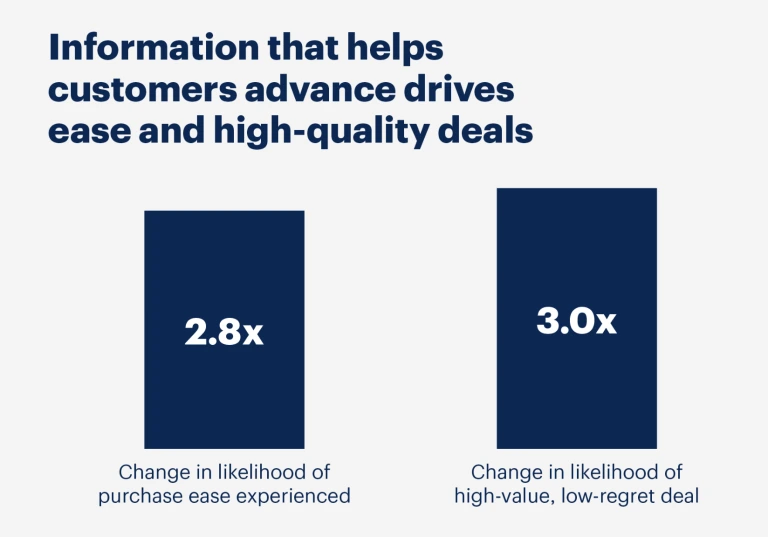
In the Decision stage, buyers might request proposals, conduct final meetings, or arrange product demonstrations or testing. It’s your responsibility to provide all the necessary information and reassurances that your solution is the best fit for their needs. In doing so, you’re more likely to drive high-quality sales.
Inside the Buyer’s Journey: Purchasing a Product or Service
The process of purchasing a product or service in a B2B context is a collaborative effort. It involves various stakeholders within the organization, each with their own perspectives and requirements. From the procurement team and the IT department to the end-users, everyone has a say in the final decision.
The purchasing process begins with the creation of a business case for the required product or service. This involves:
- Defining the need
- Outlining the expected benefits
- Estimating the costs
Once the business case is approved, the organization moves on to the vendor selection process. Vendor selection involves:
- Sending out RFPs (Request for Proposals)
- Evaluating proposals
- Conducting vendor meetings or demos/testing
This is a meticulous process that aims to ensure the chosen vendor can deliver the required product or service to the organization’s satisfaction.
Once a vendor is chosen, the negotiation and contracting phase begins. This involves finalizing the terms of the agreement, including:
- Pricing
- Delivery schedules
- After-sales support
After the contract is signed, the product or service is delivered, implemented, and integrated into the organization’s operations.
Optimizing Your Buyer’s Journey
Optimizing the buyer’s journey is a strategic necessity as it aligns your marketing and sales efforts with the buyer’s needs at each stage of their journey. By doing so, you can enhance the buyer’s experience, increase conversion rates, build long-lasting relationships, and support B2B business development goals.
Enhancing Conversion Rates
Optimizing your buyer’s journey for better conversion begins with a deep understanding of your buyers. This involves identifying their needs, preferences, and pain points at each stage of the journey using a practical customer segmentation guide.
With this insight, you can tailor your content, messaging, and engagement strategies to resonate with your buyers.
- Awareness stage. Provide educational content that helps buyers understand their problem or opportunity. This could be in the form of blog posts, whitepapers, or webinars. The goal is to position your organization as a trusted source of information, thereby attracting potential buyers to your brand.
- Consideration stage. Demonstrate the value of your solution. Provide case studies, product demos, and detailed product information that help buyers evaluate your offering. Make it easy for them to understand how your solution can address their needs.
- Decision stage. Provide personalized attention and support. This could involve one-on-one consultations, customized proposals, or detailed implementation plans. The goal is to reassure buyers that your solution is the best fit for their needs.
The Role of Persuasion and Influence
Persuasion and influence play a significant role in the buyer’s journey. In the B2B context, buyers are not making impulsive decisions. They’re making strategic choices that can impact their organization’s performance and profitability.
Persuasion in the buyer’s journey means convincing buyers that your solution is the best fit for their needs. This involves presenting compelling evidence, like:
- Case studies
- Testimonials
- Third-party reviews
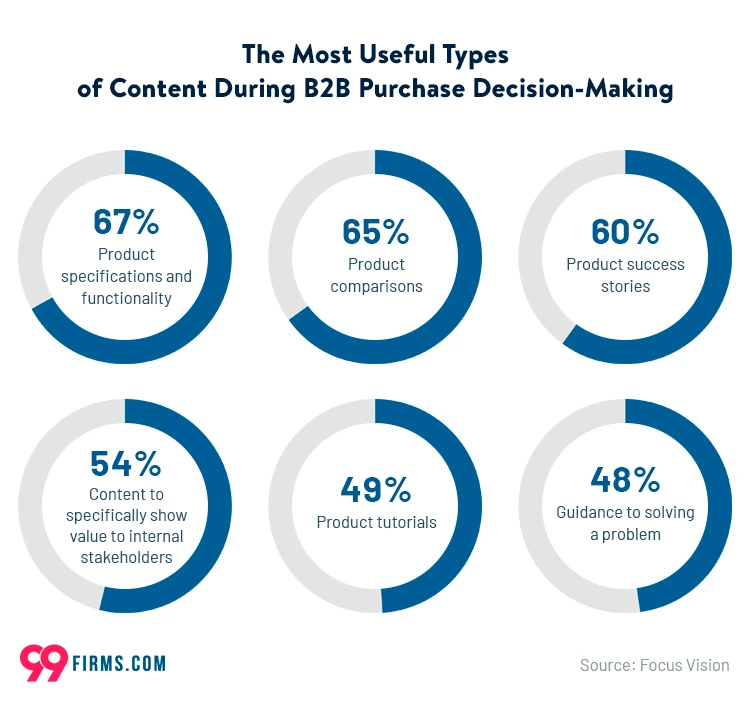
The key is to build a strong case for your solution that resonates with the buyer’s needs and aspirations.
Influence, on the other hand, is about shaping the buyer’s perception of your brand. This involves:
- Building a strong brand reputation
- Demonstrating thought leadership
- Nurturing relationships
Create a positive impression of your brand that influences the buyer’s decision in your favor.
Perfect Your Buyer’s Journey with ISBM Today
From the initial awareness stage, through the consideration phase, and finally to the decision stage, each step of the buyer’s journey offers unique opportunities to connect with potential buyers, address their needs, and position your solutions effectively.
Optimizing this journey is a continuous process that requires a deep understanding of your buyers, tailored engagement strategies, and the effective use of persuasion and influence. By doing so, you can enhance the buyer’s experience, increase conversion rates, and build long-lasting relationships.
Ready to boost your buyer’s journey? Ask about how an ISBM Membership can help you now, join us at our next Member’s Only Meeting or visit ISBM today to learn more!