

The rapid pace of technological advancement requires organizations to adapt swiftly to stay competitive. Digital transformation is crucial for integrating new technologies and processes that enhance efficiency and innovation.
This article explores the essential components of digital transformation, focusing on the five strategic pillars that drive successful implementation. By mastering these pillars, organizations can navigate the complexities of modern business and achieve sustainable growth.
Pillar 1: Vision and Strategy
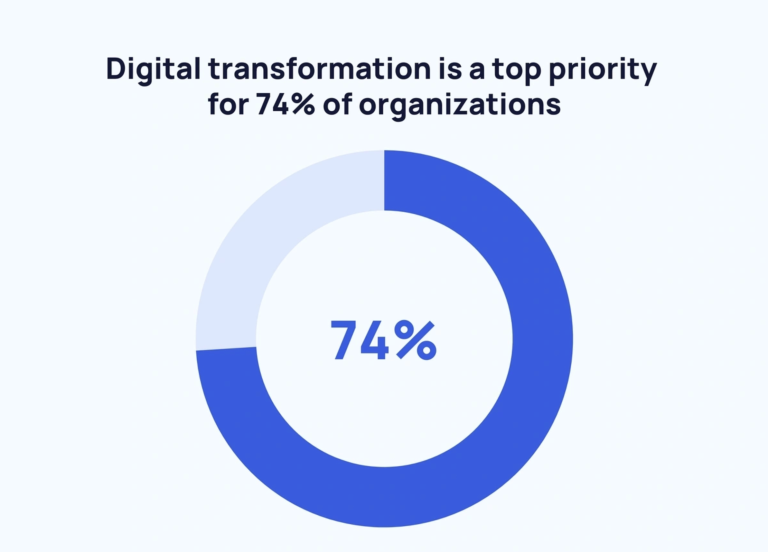
A significant 74% of organizations consider digital transformation a top priority, reflecting its critical role in driving success.
Vision Alignment with Business Goals
Strategic Planning and Roadmapping
Effective digital transformation requires meticulous planning and a well-structured roadmap. Strategic planning involves identifying key initiatives, setting realistic timelines, and allocating resources efficiently.
Roadmapping provides a visual representation of the transformation journey, highlighting milestones and critical dependencies. This approach enables organizations to anticipate challenges, adjust strategies as needed, and maintain momentum throughout the transformation process.
Suggestions:
- Conduct regular strategy sessions to reassess and refine the vision and roadmap.
- Utilize frameworks such as SWOT analysis to evaluate strengths, weaknesses, opportunities, and threats.
- Set both short-term and long-term goals to create a balanced approach to digital transformation.
Pillar 2: Leadership and Culture
Leadership Commitment and Support
For digital transformation to succeed, it must be championed by the organization’s leadership. Leaders need to demonstrate unwavering commitment to the transformation process, allocate necessary resources, and actively participate in key initiatives. This commitment helps build trust and encourages buy-in from all levels of the organization.
Building a Digital-First Culture
Cultivating a digital-first culture is essential for embedding digital transformation into the organizational fabric. This involves promoting continuous learning, encouraging experimentation, and rewarding innovative thinking. A digital-first culture empowers employees to embrace new technologies and processes, driving the organization toward its transformation goals.
Despite the high prioritization, only 30% of digital transformation projects meet or exceed their target value, highlighting the challenges and complexities involved. Addressing these challenges requires strong leadership and a culture that supports and nurtures innovation.
Suggestions:
- Invest in leadership training programs focused on digital competencies.
- Foster a culture of continuous learning by providing access to relevant training and development resources.
- Encourage cross-functional collaboration to break down silos and promote a holistic approach to digital transformation.
Pillar 3: Technology and Innovation
Adopting the right technologies and fostering a culture of innovation enable organizations to stay ahead of the curve and drive continuous improvement.
Investing in Cutting-Edge Technologies
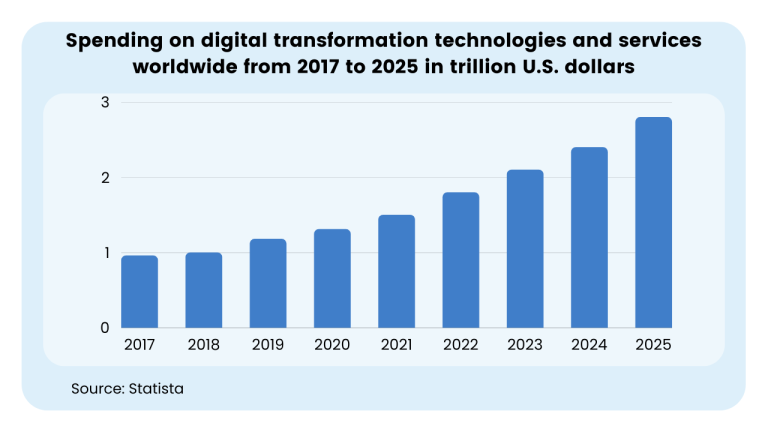
This substantial growth underscores the critical need for selecting and implementing the right technologies for digital transformation. It involves not only adopting the latest tools and platforms but also ensuring they integrate seamlessly with existing systems. Investing in technologies that enhance efficiency, improve customer experiences, and enable data-driven decision-making can significantly boost transformation efforts.
Encouraging a Culture of Innovation and Experimentation
A culture of innovation is vital for sustaining digital transformation. Organizations should encourage experimentation, allowing employees to test new ideas and approaches without fear of failure. This culture promotes continuous improvement and helps identify innovative solutions to complex challenges.
Suggestions:
- Conduct regular technology audits to identify gaps and opportunities for improvement.
- Pilot new technologies on a small scale to assess their impact before full-scale implementation.
- Focus on user-centric design to ensure technologies meet the needs of both employees and customers.
Pillar 4: Data Management and Analytics
Effective data management and analytics are essential for informed decision-making and driving digital transformation. Properly handling data ensures that insights are accurate, relevant, and actionable.
Implementing Robust Data Management Practices
Robust data management practices involve ensuring data quality, maintaining data integrity, and establishing data governance frameworks. Proper data management enables organizations to have a single source of truth, facilitating better decision-making and strategic planning.
Leveraging Advanced Analytics for Decision-Making
Advanced analytics transform raw data into valuable insights. By leveraging tools like predictive analytics, machine learning, and artificial intelligence, organizations can uncover patterns, forecast trends, and make data-driven decisions. This capability allows businesses to respond proactively to market changes and customer needs.
Suggestions:
Implement data governance frameworks to ensure data quality and compliance.
Invest in advanced analytics tools to gain deeper insights from your data.
Encourage data literacy across the organization to empower employees to use data effectively in their roles.
Pillar 5: Customer Experience and Engagement
Enhancing customer experience and engagement ensures that digital initiatives meet their needs and expectations, driving satisfaction and loyalty.
Personalizing Customer Interactions
Personalization is key to delivering exceptional customer experiences. By leveraging data and analytics, organizations can tailor interactions to individual customer preferences and behaviors. This approach not only enhances customer satisfaction, but also increases engagement and retention. Notably, around 80% of B2B buyers expect the same buying experience as B2C customers.

Using Digital Tools to Enhance Customer Engagement
Digital tools, such as customer relationship management (CRM) systems, social media platforms, and mobile applications, play a vital role in customer engagement. These tools enable organizations to interact with customers in real-time, provide seamless service, and gather valuable feedback. Enhanced engagement leads to stronger customer relationships and a better overall experience.
Suggestions:
Map the customer journey to identify key touchpoints and opportunities for personalization.
Utilize CRM systems to manage customer interactions and improve service delivery.
Leverage social media and other digital platforms to engage with customers and gather feedback in real-time.