

B2B marketers have to face complicated buyer journeys, long evaluation cycles, and high-value targets. Artificial intelligence is a practical part of modern lead generation, and it’s about time businesses hop on the wagon.
With AI, you can qualify leads faster, personalize outreach at scale, and analyze signals that humans might overlook.
Here’s how to use AI for lead generation effectively!
Quick Takeaways
- AI speeds up lead qualification and prioritization.
- Predictive intent models improve targeting accuracy.
- Content personalization becomes scalable.
- AI tools optimize campaign performance over time.
- Human oversight makes sure empathy and brand voice stay intact.
Using AI to Prioritize Leads Faster
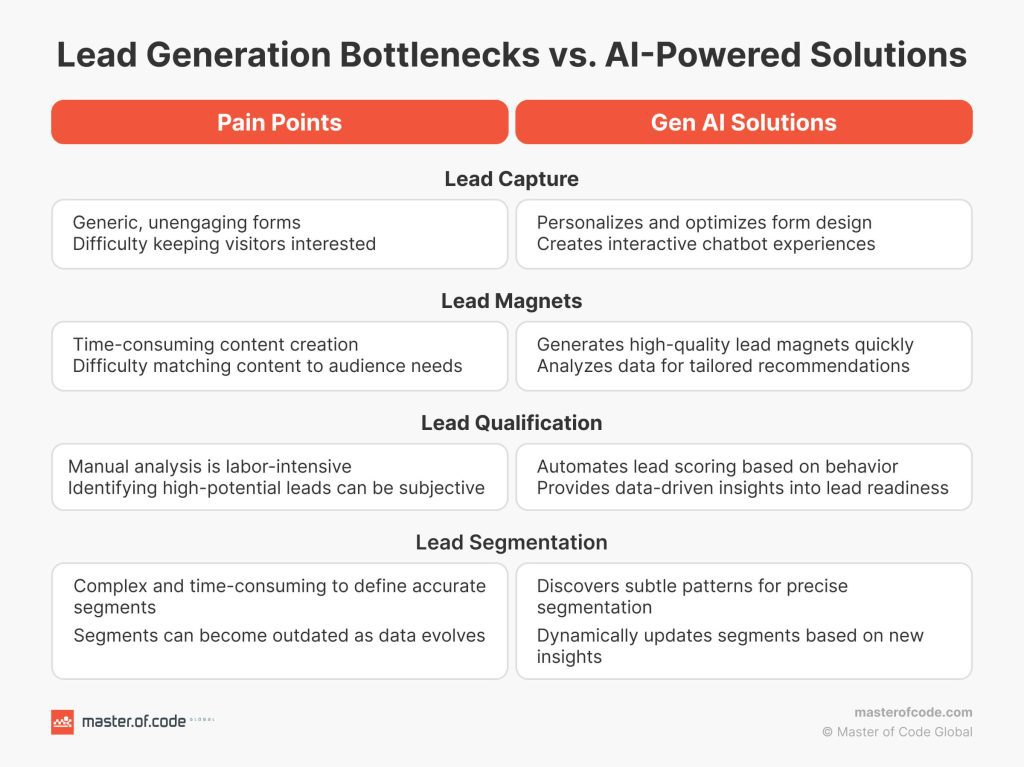
Lead generation typically slows down because you have too much raw data and too little clarity on what matters.
It pulls together firmographic information, engagement history, and behavioral signals to help you score leads now.
Instead of manually reviewing raw form entries, AI assigns dynamic lead scores. If someone downloads a product spec sheet, visits pricing pages, signs up for a webinar, and matches your ICP profile (describes a business’s ideal customer based on attributes like demographics, behavior patterns, needs, and pain points), they get a higher score.
You see that lead move into hot or warm priority, ready for sales outreach or nurture campaigns. Without AI, this process normally takes a lot of time and guessing what might work.
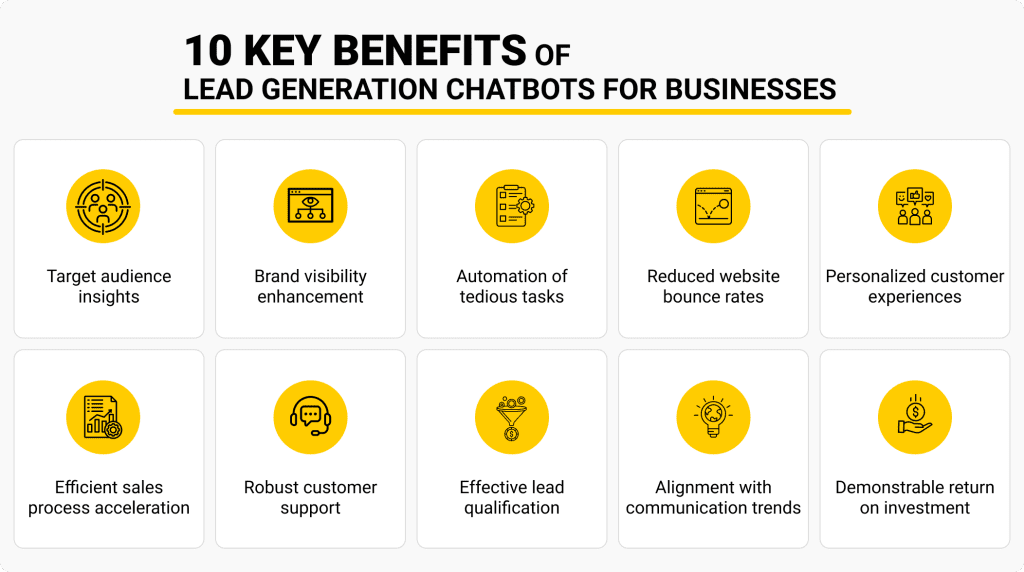
Predictive Intent Models Improve Targeting Precision
Traditional lead generation relies on demographic filters. AI shifts this by predicting buying intent from subtle signals. It learns: who tends to convert after browsing certain website pages? Who engages more with thought leadership articles than sales pages?
AI intent models can surface accounts and individuals showing interest even before they explicitly raise their hand. That insight helps you reach the right people at the right moment, instead of waiting for them to fill out a form. With quick outreach, conversions are more efficient and your campaigns feel less cold or generic.
Content Personalization at Scale
Creating personalized messages for each lead used to include manual segmentation and static email sequences. Now AI enables scalable content personalization, even at the individual level.
Based on behavioral signals and audience data, AI tools can:
- Adjust messaging tone to match the buyer’s role or industry
- Offer different content paths depending on where they are in their journey
- Automatically suggest relevant product pages or case studies
Personalization that formerly required 10 separate workflows can now happen in a single, intelligent campaign. It feels more human—because it’s aligned to what people actually care about.
Continuous Optimization Without Constant Input
Campaign tracking is most powerful when it’s instant and iterative. AI tools automate optimization of ads, email campaigns, and messaging based on live performance signals.
If one email subject line generates many opens, AI detects that pattern and adjusts future distribution. If certain ads yield higher conversions for CFO-level prospects, you shift more budget there. Product pages get recommended to visitors who view related content. The system learns without needing constant manager intervention.
This doesn’t eliminate strategy. It enhances it. You still set overall campaign goals and messages. AI just helps make sure your tactics adapt quickly, so you’re always improving based on results.
Maintain Human Oversight and Brand Voice
Don’t get it twisted: AI is powerful. But without the human touch, it can misalign with company tone or ignore subtle signals that only humans perceive.
That’s why every AI-powered lead generation flow needs humans to check it.
- Review automation rules regularly.
- Confirm that AI scoring aligns with company values.
- Make sure that content personalization doesn’t drift into generic territory.
When AI frees you from repetitive tasks, your team can focus more on strategy, creativity, and human connection, the things that AI can’t replicate (but can support).
Measuring Success—Not Just Traffic
For AI to prove its value, you need to link lead generation to results, not just volume. Track metrics like:
- Lead-to-opportunity conversion rates
- Average time from first touch to qualified lead status
- Cost per opportunity
- Pipeline influenced per channel
- Engagement lift on personalized campaigns
If AI-generated leads move through your marketing funnel faster or with higher close rates, you know you’re on the right track.
Overcoming Adoption Hurdles
Introducing AI can feel extremely overwhelming. Teams may worry about data quality, overreliance on algorithms, or disappointing ROI. Here’s how to address those concerns:
- Start small with one focused use case—like intent scoring or content personalization.
- Use a test group to validate performance before rolling out broadly.
- Monitor AI suggestions closely during the initial phase.
- Gather user or prospect feedback. Are messages feeling relevant?
- Iterate regularly—AI workflows are only as good as continuous calibration.
AI shouldn’t replace human leadership; it should empower it. You still dictate every ounce of strategy. AI just helps you execute it better.
What Does Human-Led AI Look Like in Practice?
Imagine an account downloads a pricing guide, then watches a video on product integrations, and later visits a compliance FAQ. AI detects that activity and updates their lead score.
An email workflow triggers with a custom message like: “You explored product integrations. Here’s a guide specific to your industry,” along with a request to book a consultation.
Later, sales follows up based on a high score or content engagement. Marketers inspect those flows and notice that adding a case study boosts response rates. They update the nurture sequence.
AI takes it from there. No random messaging, but tighter alignment to what the buyer is doing.
Final Thoughts
AI for lead generation helps B2B teams do more with less. It turns raw data into relevant insights, automates personalization, and continually optimizes outreach, all while freeing your team to focus on strategy and creative work.
However, when you treat AI like a black box, it becomes risky. Manage it carefully and your AI becomes an extension of your marketing intelligence instead of a replacement.
Start with a narrow use case. Measure impact. Build momentum. And keep it grounded in human oversight and empathy. With the right approach, AI becomes an engine for smarter, more scalable B2B lead generation.
ISBM can help you stay ahead of the curve by connecting you with practical, research-driven insights into how B2B marketing is evolving. Through expert resources and peer collaboration, we provide the knowledge base and support needed to make informed decisions—especially in fast-changing areas like business market segments. We provide open courses and customized education programs for your marketing teams. Become a member today!