

Your team isn’t ready for the rest of 2025 and beyond unless they have a firm grasp on AI skills for marketing teams 2025.
Artificial intelligence isn’t optional anymore—it’s embedded in work tools, analytics dashboards, customer interactions, and marketing workflows, making an AI primer for leaders essential. Your deep understanding matters no less than your technical ability.
In the years to come, you’ll be successful by blending AI tools with a healthy dose of human judgment. AI skills training in 2025 means so much more than coding or automations—it’s about asking the right questions and guiding tools toward the right solutions.
Quick Takeaways:
- AI skills training must include ethical reasoning alongside technical tools.
- Prompt engineering becomes a baseline skill for interacting with AI.
- Data literacy—especially interpreting AI outputs—is critical for decision-making.
- Teams need training on AI tool evaluation to adopt the right tech.
- Clear governance strategies ensure responsible and compliant AI use.
Why Everyone Needs AI Skills in 2025
AI usage has exploded, from chat assistants to predictive analytics. This year, teams without AI training are falling behind. They miss efficiency gains and risk data misuse.
Your people need more than generic training; they need task-specific skills and frameworks to improve AI readiness.. AI tools should empower them, not replace them. Effective training lets teams shape AI, not just consume results.
Building a Foundation: Data Literacy and Interpretation
Before touching an AI tool, your team needs strong AI literacy and a solid data foundation. They need fluency with basic stats, interpretation of dashboards, and clear understanding of data sources. They must understand biases, sampling errors, and indicator limitations. Those issues determine whether an AI tool leads or misleads.
Pair data literacy sessions with real-world case studies: review flawed forecasts, mis-segmented audiences, or incorrect product recommendations. When people see examples of misinformation, they learn to spot and correct missteps before clicking “run”.
Prompt Engineering: Asking AI the Right Way
You don’t necessarily need to code to interact with AI. But you do need to ask well. That’s where prompt engineering comes in. Whether your team uses ChatGPT-style tools or applies natural language queries to internal analytics, they need structure.
Effective prompts start with clear context, describe the goal, include examples, and define expected output format. Training sessions should be hands-on: give a prompt, show flawed outcomes, and tweak the prompt for improvement. Your team learns that small changes yield dramatically better answers.
Prompt engineering workshops go a step further. Build scenarios—like generating buyer personas or drafting email sequencing—and layer in questions like “show your reasoning” or “what uncertainties did you weigh?” That deepens understanding and improves AI fluency.
Integrating Ethical Awareness Early
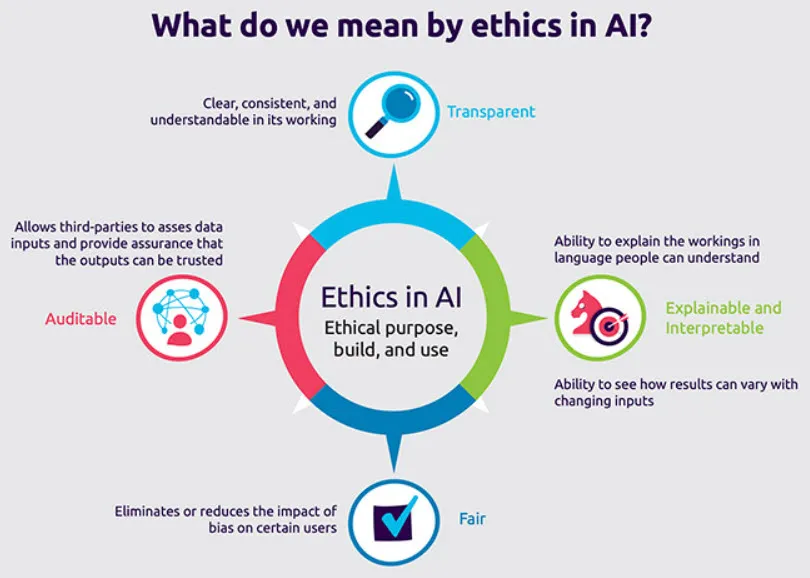
AI has biases. If your team doesn’t know how to test for fairness, they risk alienating stakeholders or causing reputational damage. Ethical training is important, not as a checkbox, but as a core skill.
Start by teaching frameworks like fairness testing. Show tools that audit AI for demographic skew. Run tabletop exercises around real-world scenarios—like loan approvals or hiring influencer lists. Ask: “Who benefits? Who doesn’t? What happens if we use this tool without review?”
Ethical awareness training also covers privacy, copyright, and regulatory boundaries. Embed policy guidelines directly into AI workflows—especially tools that interact with sensitive data or automate external messaging. Transparency builds trust.
Technical Skills: From No-Code to Advanced Builders
Not everyone needs to code—but some do. Your training curriculum should follow a tiered skill model:
- Tier 1 – Basic users learn no-code tools like AI writing assistants, visual chatbots, or AI plug-ins. Focus on prompting and assessing results.
- Tier 2 – Power users link tools using APIs or configure multiple models together via platforms like Zapier or Make.
- Tier 3 – Builders/Engineers learn scripting, fine-tuning, and custom model deployment via Python, R, or cloud services.
Map team roles to tiers. A content strategist might never need to write code, but they must evaluate summary outputs or spotting hallucinations. Engineers need to spot model drift and design deployment guards. Provide role-based AI skills training so everyone reaches fluency at the level they need.
Designing Effective Learning Journeys
Training isn’t a one-off. Build structured learning journeys:
- Intro Workshop: AI history, overview of tools, risks, and basic tasks.
- Hands-On Practice: Real team data or scenarios, prompt drills.
- Ethics Session: Bias testing and fairness frameworks.
- Tool Deep-Dives: Including no-code and technical integrations.
- Ongoing Clinics: Drop-in sessions or mini hackathons.
Pair pedagogy with real tasks: ask the team to improve a customer email with AI or reverse-engineer how a recommendation engine works. Pair training with paired work on current projects for context. Return to basics when tools change or compliance requirements evolve.
AI Governance and Stewardship
AI without governance is risky. You need policies that define:
- What data AI tools can use
- Who approves results before public use
- How internal vs. external tools differ
- Roles: prompting specialists, ethics reviewers, tech stewards
- Audit practices and logs for model use
Deploy small governance pilots on a few projects to test policy in action. Use insights to tweak roles and frameworks. Governance should be distributed: reporting leads should also be empowered to review AI outputs. Governance fosters accountability and confidence.
AI Skills for Marketing Teams 2025: Building AI Fluency
Training works best when AI fluency becomes cultural. Celebrate team use cases: sharing a useful prompt or ethical discovery builds confidence. Reward experimentation—pilot AI assistant in email but stay mindful of compliance. Invite questions and run internal office hours.
Host “AI show and tell” sessions where someone demonstrates a new use case, teaching others how it works. Use peer learning to help reinforce positive practices. That shared knowledge ensures AI adoption continues while tools evolve.
Tracking Impact and Evolving Learning
Finally, track program metrics:
- Tool adoption: which teams use which tools, and for what tasks
- Performance gains: time saved or content produced vs. previous manual methods
- Quality signals: frequency of errors, ethical catch rates, stakeholder feedback
- Innovation indicators: new use cases launched vs. no prior AI use
Use survey feedback to iterate program design. If content teams find summarization useful but hate having to verify output, consider automating checks or adding an approval step. Schedule quarterly program reviews to add tools, update ethics guidelines, or pivot training to emerging issues.
AI Skills Training for B2B Sales
In B2B organizations, where long buying cycles and account-based strategies dominate, AI skills training takes on unique strategic weight. B2B teams must apply AI to streamline workflows across sales enablement, marketing automation, and technical content creation—all while aligning with multi-persona decision making.
Training should address how AI integrates with CRMs, marketing platforms, and ERP systems. B2B professionals also need instruction in:
- Creating AI-powered sales briefings tailored to target roles
- Segmenting B2B audiences using AI-assisted firmographic and behavioral data
- Producing long-form content like whitepapers or product comparison matrices
AI training in B2B must include team collaboration scenarios, where AI output is a starting point for human-led refinement—especially when accuracy, tone, and regulation come into play. Teaching teams how to guide AI while preserving nuance builds competitive differentiation.
Strategizing B2B Team Readiness for AI
AI strategy isn’t just about tools—it’s about team capability alignment across disciplines. Sales, product marketing, research, and operations must move together. In B2B ecosystems, coordination is everything. AI cannot operate in silos.
Train team leaders to:
- Build AI usage maps across touchpoints and campaigns
- Establish shared prompts and tagging taxonomies for consistent results
- Set review layers for AI output when accuracy and legal compliance are required
- Develop feedback loops between technical and nontechnical teams to iterate training data and workflows
Coordinated training programs should be role-specific but system-aware, ensuring sales doesn’t push ahead with AI-generated outreach that conflicts with product messaging. Strategic alignment ensures AI enhances brand consistency and trust across long decision journeys.
What a Fully Prepared Team Looks Like
By mid‑2025, a prepared team will:
- Prompt confidently across AI chat, writing, APIs
- Interpret model output and spot strength vs. weakness
- Apply basic fairness and bias evaluation
- Link AI results to business goals—efficiency, creativity, consistency
- Understand and follow governance practices in workflows
That’s not just fluency—it’s ownership. Ownership of tools, outputs, and outcomes. AI becomes part of the team, not something outsourced or feared.
Are YOU Ready for AI-Driven Teams?
Preparing team for AI isn’t about ticking AI boxes—it’s about empowering people to prepare your organization for AI. When your team learns skills, ethics, and ownership, together you move confidently into 2025. They won’t just use AI—they’ll make it work smarter than ever.
How will you prepare your team for AI success?
ISBM can help you stay ahead of the curve by connecting you with practical, research-driven insights into how B2B marketing is evolving. Through expert resources and peer collaboration, we provide the knowledge base and support needed to make informed decisions—especially in fast-changing areas like business market segments. We provide open courses and customized AI training programs for your marketing teams. Become a member today!