

Successful B2B new product development research aligns technical capabilities with real buyer needs before significant investment is made.
Every decision in the early stages shapes your success, from idea generation to validation. The best methods keep uncertainty away, filter out weak concepts, and build confidence before moving forward.
Quick Takeaways:
- AI can replace traditional idea screening committees by scoring concepts based on multiple weighted criteria.
- Early-stage research should incorporate both technical feasibility and market demand before heavy investment.
- Competitive intelligence must go beyond direct competitors to include emerging technologies and substitute solutions.
- Structured buyer feedback provides direction for refining concepts before prototyping.
B2B New Product Development Research: Identifying Market Gaps and Opportunities
Understanding unmet needs requires structured market research that analyzes both business and buyer pain points and market gaps. B2B organizations should assess:
- Industry reports
- Patent filings
- Buyer feedback
Tracking competitor innovation provides insight into shifting demand. AI-driven tools can scan global patent databases, trade publications, and buyer sentiment to detect trends before they gain traction.
Opportunities for new products: supply chain challenges, regulatory changes, and shifts.
Companies selling to industrial manufacturers, for example, may find buyers struggling with material shortages, leading to demand for alternative components. AI-driven research accelerates this process by identifying patterns that might take months for a research team to uncover manually.
Industry shifts often come from outside traditional markets. A company focused on automotive coatings may overlook how sustainable materials in consumer packaging influence buyer expectations. AI helps detect cross-industry influences, providing early signals before competitors respond.
AI-Powered Idea Generation and Screening
AI enables faster product innovation by generating ideas grounded in real-world data and emerging industry needs. Traditional brainstorming sessions often rely on intuition and internal perspectives. AI suggests a new approach by generating product ideas based on real-world data. AI creates concepts rooted in industry needs rather than internal assumptions by analyzing:
- Technical specifications
- Competitor offerings
- Market demand
Once ideas are generated, screening determines which ones hold the most potential.
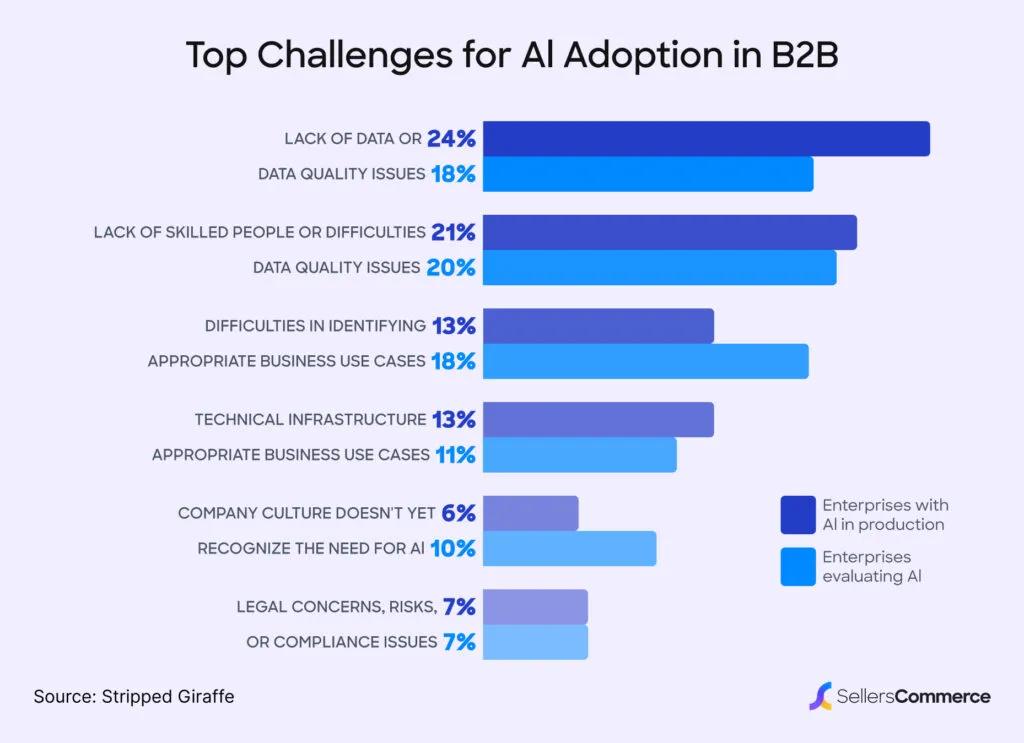
While AI adoption in the B2B sector has been a slow march uphill, it’s incredibly beneficial when used properly.
AI is Changing B2B Brainstorming Sessions
AI-driven models assess feasibility, market demand, and profitability. A structured scorecard approach allows AI to rate ideas across multiple factors, such as manufacturing complexity, scalability, and alignment with emerging trends. Scoring replaces subjective decision-making, enabling faster, data-driven evaluations.
For example, an AI system analyzing electric vehicle supply chains might identify a growing need for modular battery components. It could then generate product concepts, evaluate cost-effectiveness, and predict buyer adoption rates based on market data. This level of assessment eliminates weak concepts before resources are committed to development.
Traditional screening processes often require committees to review concepts which introduces bias and slow decision-making. AI accelerates this step by analyzing far more data points than a human team could process. It also applies consistent evaluation criteria, reducing the likelihood of weak ideas advancing due to internal influence rather than market potential.
Buyer-Centric Concept Validation
Once promising ideas are selected, direct feedback from B2B buyers determines whether concepts meet real needs. Conducting qualitative and quantitative research reveals insights that market data alone cannot provide. AI enhances this process by analyzing buyer responses for sentiment trends, identifying objections, and recommending refinements.
Structured surveys, expert interviews, and prototype demonstrations uncover details about:
- Pricing sensitivity
- Adoption barriers
- Feature preferences
Industrial equipment manufacturers, for example, may learn that buyers prioritize durability over additional features. Without this input, a product team might invest in unnecessary specifications, increasing production costs without adding value.
Aerospace component suppliers often engage engineers and procurement teams early in development. AI-driven sentiment analysis tracks feedback trends, allowing product teams to adjust specifications before prototypes are built. This iterative approach reduces development cycles and improves alignment with buyer expectations.
Different industries require unique validation methods. A company developing medical devices, for instance, must factor in regulatory compliance alongside buyer demand. AI can scan regulatory databases and market feedback simultaneously, highlighting where approval processes may delay product launch.
Competitive Intelligence Beyond Direct Rivals
New product research must extend beyond direct competitors. Substitute solutions, emerging technologies, and industry shifts impact market positioning. AI-driven tools collect and analyze data from industry conferences, regulatory filings, and technical journals to provide a broader perspective.
A company developing automation software for logistics might discover that robotics startups are attracting investment, signaling a shift toward physical automation rather than software-based optimization. Understanding these shifts early helps companies refine their product roadmap.
B2B firms selling industrial coatings, for instance, benefit from tracking advancements in material science. AI tools identify alternative materials under development, enabling proactive adjustments to product formulations before competitors react. This type of intelligence informs long-term strategy and prevents reactive decision-making.
AI also detects early signals that human researchers might miss. A supplier of HVAC components, for instance, might track global energy efficiency regulations. AI can analyze these policies, predict their impact, and recommend product adaptations before mandates take effect.
Prototyping and Testing With AI
AI-driven simulations accelerate product development by reducing the number of physical iterations required before full-scale production.
Virtual testing environments allow engineers to refine designs without manufacturing physical models. AI:
- Analyzes test results
- Recommends adjustments
- Predicts long-term performance
For example, a manufacturer developing a new heat-resistant polymer can use AI simulations to test durability under extreme temperatures. Instead of multiple physical prototypes, AI refines the formulation digitally, reducing time and costs.
Buyer feedback at this stage ensures the product remains aligned with market needs. Engineers working on industrial filtration systems might test variations based on buyer input, adjusting pore sizes or material compositions before finalizing production specifications. AI assists by modeling the effects of these changes and recommending optimal configurations.
B2B firms supplying high-tech components often rely on AI for stress testing. A supplier of aerospace materials, for example, can simulate performance under extreme conditions, reducing the risk of late-stage failures.
Launch Strategy and Post-Launch Optimization
Pricing, distribution, and messaging should be guided by a clear product marketing strategy aligned with buyer expectations. Once validation is complete, companies can build a data-driven go to market strategy aligned with buyer behavior, launch planning begins. Pricing strategies, distribution channels, and promotional efforts must align with buyer purchasing behavior. AI-powered analytics track competitor pricing models, buyer purchasing cycles, and seasonal demand fluctuations to guide decision-making. Effective launch planning should align with proven strategies on how to sell new products in complex B2B markets.
Post-launch, AI tools monitor:
- Adoption rates
- Buyer feedback
- Performance metrics
Adjustments to product positioning, feature sets, or pricing can be made based on data-driven insights. For example, an industrial sensor manufacturer might detect that early adopters favor specific applications, leading to a marketing shift toward those use cases.
AI-driven tracking also improves post-launch support. Predictive analytics detect patterns in early buyer feedback, allowing for rapid adjustments. A supplier of commercial refrigeration units, for instance, can analyze service request trends and identify recurring issues before they impact broader adoption.
For companies operating in regulated industries, AI aids compliance monitoring post-launch. Pharmaceutical manufacturers track global policy changes, ensuring that formulations or labeling meet evolving standards.
Moving Forward With AI-Driven Research
Modern B2B new product development research has entered a new era where AI enhances every stage of insight, validation, and decision-making. From identifying market gaps to screening ideas, validating concepts, and refining prototypes, AI streamlines decision-making while improving accuracy. Companies that integrate AI into their research processes gain an advantage by making faster, more informed choices.
Traditional research methods still have a place, but AI eliminates inefficiencies and reduces risk. Product teams leveraging AI-driven insights position themselves for success by aligning development efforts with real-world buyer needs. Organizations that integrate AI-driven research stay ahead by detecting industry shifts before competitors react.
ISBM is a nonprofit, global network offering practical B2B product development resources and research insights.Ask about how an ISBM Membership can help you now or visit ISBM today to learn more!